
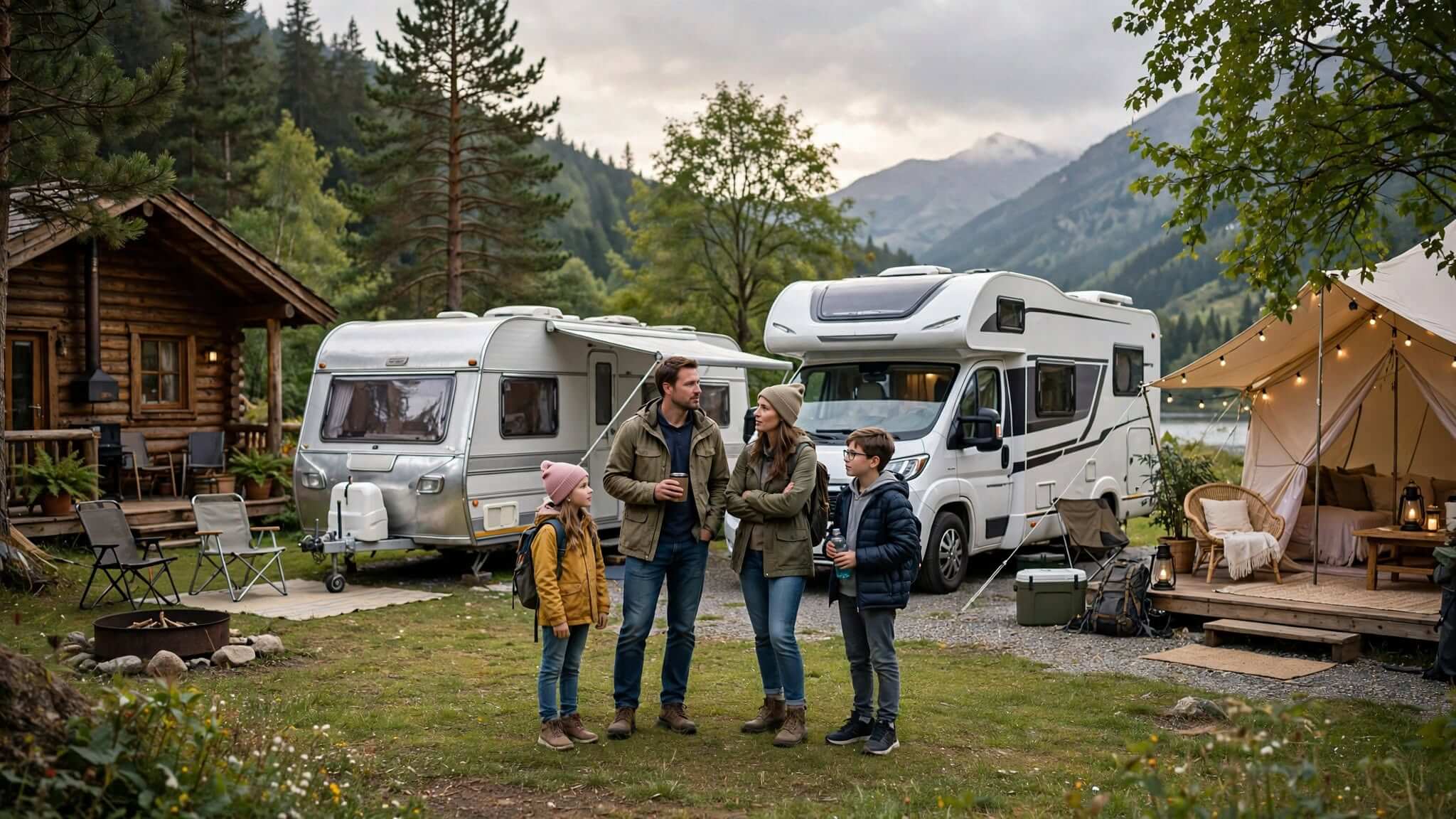
Choosing where to sleep can shape almost every part of a camping holiday. Your accommodation affects how well you rest, how easily you prepare meals, how much protection you have from changing weather, and how much equipment you need to bring.
Camping accommodation is no longer limited to a basic tent. Depending on the campsite and your travel style, you may be able to choose from tents, caravans, campervans, cabins, pods, or furnished glamping units. The right choice depends less on appearance and more on how well the accommodation fits your group, destination, budget, and daily routine.
Start with the Type of Camping Holiday You Want
Before comparing accommodation options, think about what you actually want from the trip. Someone planning a quiet weekend surrounded by nature may have very different needs from a family spending a full week at a busy holiday park.
Consider how much time you expect to spend at your accommodation. If most of the day will be devoted to walking, cycling, swimming, or sightseeing, a simple place to sleep may be enough. If you expect to cook, relax, and spend evenings at your pitch, extra living space becomes more important.
Your tolerance for basic facilities matters too. Some campers enjoy sleeping close to the ground and cooking outside. Others prefer a proper bed, electricity, heating, and easy access to a private bathroom.
Compare the Main Camping Accommodation Options
Tents for a Traditional Outdoor Experience
Tent camping offers a simple way to stay close to nature and usually requires you to bring most of your own sleeping and cooking equipment. Tent size should be considered carefully. A tent described for a certain number of people may technically provide enough sleeping space without leaving much room for bags, clothing, or other camping gear.
For a longer holiday, a tent with a separate living area can make everyday tasks easier. Weather resistance, ventilation, ease of pitching, and storage space are also worth checking before making a choice.
If you are relatively new to outdoor holidays, reviewing 15 Essential Camping Tips for First-Time Campers can also help you understand what equipment and preparation may be needed before choosing tent-based accommodation.
Caravans and Campervans for Greater Flexibility
A caravan or campervan combines transport or mobile living with useful facilities. Depending on the model, you may have beds, seating, storage, cooking equipment, electricity, and sometimes washing facilities in one space.
This option can be convenient for travellers who want more shelter than a tent provides while keeping the feel of a camping holiday. However, practical details matter. Check whether the campsite accepts your vehicle size, whether electric hook-up is available, and whether there are restrictions on awnings or additional equipment.
For caravans, towing requirements and pitch access should also be considered before departure.
Cabins, Pods, and Glamping Accommodation
Cabins and camping pods can suit travellers who enjoy campsite surroundings but prefer not to carry and pitch a tent. They may also be useful when travelling with young children, older relatives, or anyone who values a more conventional sleeping arrangement.
Facilities vary considerably. A basic pod may provide little more than shelter, lighting, and sleeping space, while another unit may contain beds, a kitchen, heating, and a bathroom. Glamping accommodation can vary just as widely.
For this reason, do not rely on the accommodation name alone. Read the facility description carefully so you know exactly what is included.
Match the Accommodation to Your Group
The number of guests is only the starting point. Think about how the space will work when everyone is inside at the same time.
A couple travelling for two nights can usually manage with less space than a family staying for a week. Families may need room for children’s clothes, food, toys, pushchairs, and wet outdoor gear. Groups of adults may value separate sleeping areas and greater privacy.
Also consider accessibility. Steps, narrow entrances, uneven ground, high beds, or distant toilet blocks can make some accommodation unsuitable for people with limited mobility.
Check the Facilities Before Booking
Two campsites offering similar accommodation can provide very different experiences. Check both the facilities inside your chosen unit and the shared amenities around the site.
Find out whether bedding is supplied or must be brought from home. If you plan to cook, check whether there is a stove, refrigerator, kettle, cookware, or simply an empty preparation area. For tent and caravan pitches, confirm whether electricity, drinking water, waste disposal, and nearby washing facilities are available.
Bathroom arrangements deserve particular attention. Some cabins and glamping units have private bathrooms, while others rely entirely on shared campsite facilities.
Consider Weather and the Time of Year
Accommodation that feels comfortable in mild summer weather may be less suitable during a cold or wet period.
For tent camping, look at ventilation as well as protection from rain. Poor airflow can make a tent uncomfortable even when the weather is dry. During cooler periods, insulation and suitable sleeping equipment become more important.
For cabins, pods, and caravans, check whether heating or cooling is provided rather than assuming it will be included. Seasonal conditions can also affect access to the campsite, particularly in rural or exposed locations.
Think Beyond the Nightly Price
The lowest accommodation price does not always mean the lowest overall trip cost. A basic pitch may require you to buy or transport a tent, sleeping bags, cooking equipment, chairs, lighting, and other supplies.
A more equipped unit may cost more initially but reduce the amount of gear you need. Compare what is included rather than looking only at the advertised rate.
Also check practical booking details such as deposits, cancellation conditions, cleaning requirements, check-in times, and charges for electricity, pets, vehicles, or additional guests.
Pay Attention to the Pitch or Location
Where your accommodation sits within the campsite can matter almost as much as the accommodation itself.
Families may appreciate being reasonably close to toilets and washing facilities, while light sleepers might prefer a quieter area away from playgrounds, entrances, entertainment spaces, or busy communal facilities.
Consider shade, ground conditions, privacy, parking distance, and access to water. If you are bringing a large tent, caravan, or awning, confirm the pitch dimensions before arrival.
Conclusion
Choosing the right accommodation for a comfortable camping holiday comes down to matching the space with the way you intend to travel. Think about sleeping arrangements, weather protection, cooking facilities, bathrooms, storage, accessibility, and campsite location before booking.
A tent may be ideal when simplicity and outdoor living are priorities, while a caravan, campervan, cabin, or pod can provide additional shelter and convenience. By checking exactly what is included and considering the needs of everyone travelling, you can choose accommodation that makes daily life at the campsite easier and more enjoyable.